
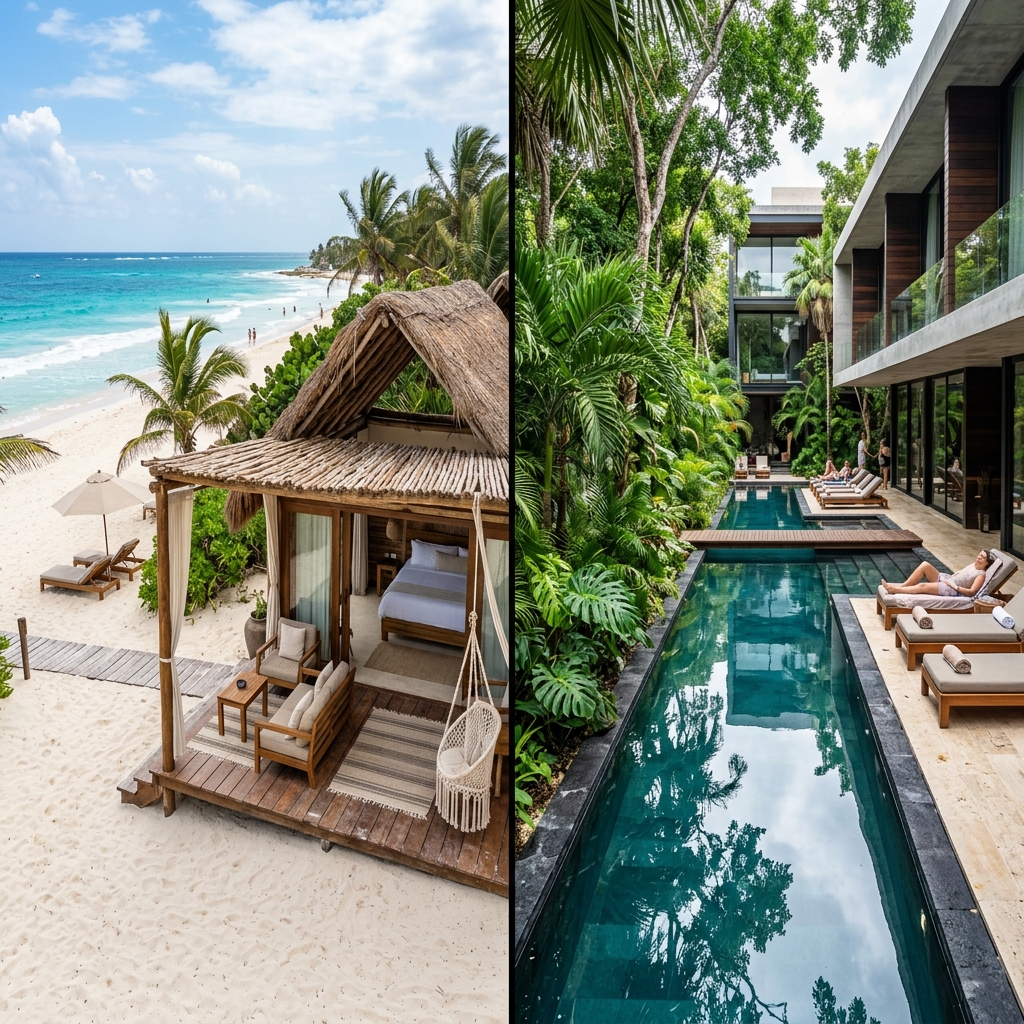
Tulum has two distinct places to stay: the hotel zone (a 10-kilometer stretch of beach road south of the ruins) and Tulum Pueblo (the actual town 2 kilometers inland). The choice between them is the most consequential decision you'll make about the trip.
The hotel zone — what you're paying for
The Tulum hotel zone is one of the most architecturally and aesthetically distinctive resort destinations in the world. Eco-hotels built with local materials (thatched roofs, wooden structures, cenote access) in jungle settings that create genuine seclusion. The hotels range from boutique properties with 8–12 rooms to mid-sized operations with 30–60 rooms. Almost none have electricity in the traditional sense — many use solar power, generators for limited hours, or candles and natural light as primary illumination. This is a feature to some travelers and an inconvenience to others.
Price range: $200–1,500+ USD per night depending on property and season. High season (December–March) rates at popular properties are often 3–4x low season rates. The best properties book out 2–4 months ahead for December and January.
The hotel zone — what you're not getting
Reliable WiFi (limited or nonexistent at many properties). Air conditioning on demand (most eco-hotels use ceiling fans and cross-ventilation). Consistent hot water. Restaurant choice within walking distance — many hotel zone properties are isolated from dining options and require a taxi or bicycle to reach restaurants. The hotel zone road is unpaved and becomes difficult in heavy rain. Mosquitoes are more present in the jungle-adjacent hotel zone than in Pueblo.
Tulum Pueblo — the alternative
Tulum Pueblo has its own accommodation options — small boutique hotels, guesthouses, and Airbnb rentals in the town center. Prices: $40–180 USD per night depending on type and season. You're 2–4 km from the beach (taxi or bicycle required) but walking distance to the best restaurants, the market, and the local social life. Reliable WiFi, air conditioning, and hot water are all standard. Better for digital nomads, budget-conscious travelers, and anyone who wants to experience Tulum as a town rather than a resort.
Aldea Zamá — the emerging middle option
Aldea Zamá is a planned residential and hotel development between Tulum Pueblo and the hotel zone. More affordable than the beach road, more accessible than Pueblo-only, with some properties having partial jungle settings. Increasingly popular with visitors who want the Tulum environment without the full hotel zone price tag. Prices: $80–300 USD per night at hotel properties.
Which to choose
Hotel zone if: the beach is the primary draw, you're on a honeymoon or anniversary trip, you want the full Tulum aesthetic experience, and budget is not the limiting factor. Tulum Pueblo if: you're traveling for 5+ days and want a base rather than a resort, you're working remotely, you prioritize food and local culture, or you're budget-conscious. Aldea Zamá if: you want a middle path between the two at a moderate price.
