
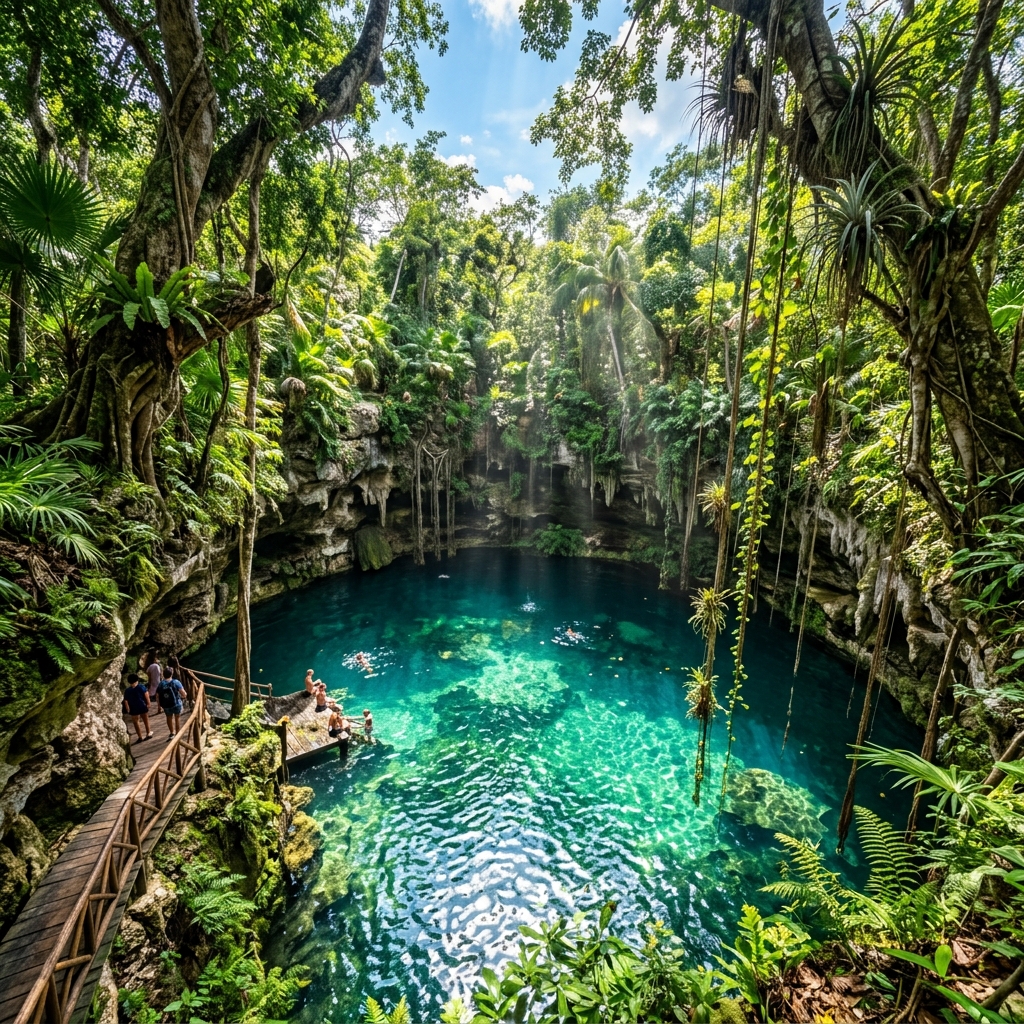
Tulum sits at the center of the world's largest underground river system — the Sac Actun cave network, which runs over 370 kilometers beneath the Yucatán Peninsula. The cenotes accessible from Tulum are the surface entry points to this system. They range from Instagram-famous open pools to rarely-visited cave chambers that require a guide and a headlamp. Here's how to navigate them honestly.
The cenote landscape around Tulum
Most Tulum cenotes fall within a 15-kilometer radius of Tulum Pueblo. The highest concentration is west of town on the Cobá road — Gran Cenote, Calavera, and Dos Ojos are all within 10 kilometers of each other. A second cluster exists further west toward Cobá. A third group runs south toward Muyil and the Sian Ka'an Biosphere Reserve.
Gran Cenote — the most visited
Three kilometers west of Tulum on the Cobá road. The most photographed cenote in the Riviera Maya — a partially open cavern with brilliant turquoise water, stalactite formations visible in the cave sections, and freshwater turtles that have become permanent residents. Entry: $350 MXN. Opens at 8am. By 10am on weekends, the cenote is at uncomfortable capacity. Arrive at 8am or accept the crowds. Snorkel rental available on site ($50 MXN). No reef-safe sunscreen compliance enforcement here, but you should still use it — the cave ecosystem is sensitive.
Cenote Calavera (Temple of Doom)
Four kilometers from Tulum on the Cobá road, 1 kilometer past Gran Cenote. A smaller, less-visited open cenote with three entry holes in the surface — the largest can be jumped from the rim (approximately 3 meters). The "Temple of Doom" nickname oversells the drama but the format is genuinely fun: jump in, swim through the partially submerged cave passages, and exit via a ladder. Entry: $200 MXN. Gets busy after 11am but recovers quickly because it doesn't hold large groups simultaneously.
Dos Ojos — the cave system benchmark
Ten kilometers west of Tulum. The Dos Ojos ("Two Eyes") cave system is one of the most famous cenote diving and snorkeling destinations in the world. The twin caverns are connected by a 400-meter cave passage that's accessible to snorkelers with a guide. Water clarity: often exceeding 50 meters — clearer than any ocean anywhere. Entry with snorkel tour and guide: $500–600 MXN. The cave snorkeling section (not the open cenote swim) is the reason to come here — it's categorically different from any open cenote experience. Book in advance; group sizes are limited.
Cenote Zacil-Ha
Two kilometers west of Tulum. A smaller open cenote with rope swings, a wooden platform, and a casual atmosphere. Less dramatic than Gran Cenote but more relaxed — it's used as much by local families as by tourists. Entry: $150 MXN. Good choice for a second cenote visit after Gran Cenote earlier in the day.
Getting there independently
Bicycles are available for rent throughout Tulum Pueblo ($100–150 MXN per day) and the cenotes on the Cobá road are all within cycling distance. Gran Cenote is 3 km — 15 minutes by bicycle. Dos Ojos is 10 km — 45 minutes. Taxis from Tulum Pueblo to Gran Cenote: approximately $80–100 MXN. To Dos Ojos: $150–200 MXN. Organized tours from hotels cost 3–4x the independent rate for the same cenotes.
