
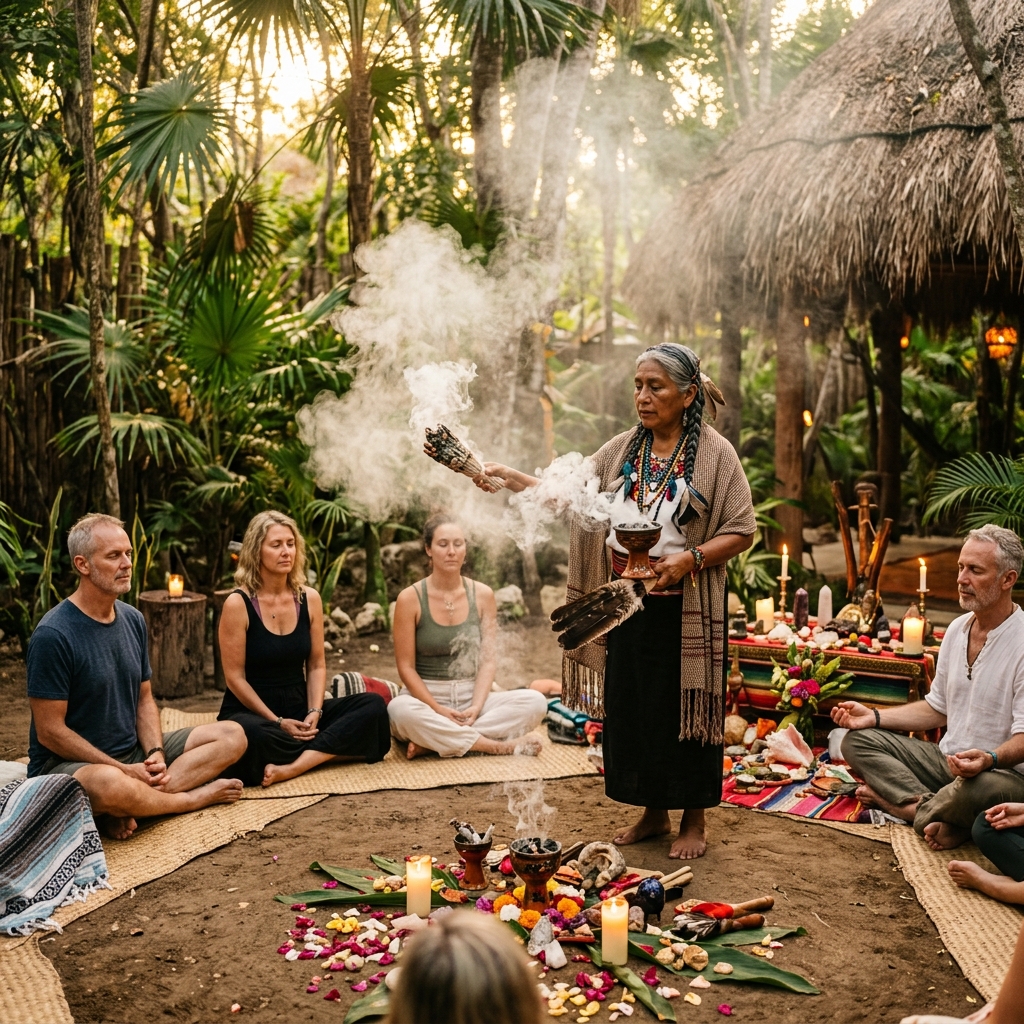
Tulum has positioned itself as a spiritual destination with more deliberateness than perhaps any other tourist location in the world. The "Mayan spirit," the cenotes, the jungle setting — all are marketed as components of a spiritual experience. Some of it is genuine. Some of it is sophisticated branding. Here's how to tell the difference.
The genuine Maya spiritual tradition
The Yucatán Peninsula is home to an indigenous Maya population with a continuous spiritual tradition dating back thousands of years. Authentic Maya ceremonial practice — temazcal, cacao ceremonies, astrology based on the Tzolk'in calendar, and healing with local plants — exists in Tulum and the surrounding region and is practiced by community members whose families have maintained these traditions across generations. Finding genuine practitioners requires looking beyond the hotel zone: the Maya communities around Cobá, Muyil, and Tulum Pueblo are the right places to ask.
The commercialized wellness spirituality
The hotel zone version of Tulum spirituality is a distinct thing — a blending of yoga, psychedelic ceremony, crystal healing, human design, Ayurvedic concepts, and Maya aesthetics into a coherent aesthetic that functions as luxury entertainment. This is not inherently fraudulent; the experiences can be meaningful and the practitioners are often sincere. But calling it "Maya tradition" is usually inaccurate. Most hotel zone spiritual offerings are created by and for the international wellness tourist market, not rooted in indigenous Maya practice.
Meditation
Independent meditation practice in Tulum has excellent environmental support — the sound of the ocean, the quality of the air, and the jungle setting create genuine conditions for quiet. Several studios in Tulum Pueblo offer morning meditation classes: $10–20 USD per session, significantly less commercialized than hotel zone offerings. Casa Gaia (Tulum Pueblo) has the most consistent daily meditation schedule accessible to visitors. The sessions are secular and technique-focused rather than spirituality-branded.
Cacao ceremonies
A genuine Mesoamerican ceremonial tradition involving drinking high-concentration ceremonial cacao (not chocolate — the raw cacao at dose levels that produce mild cardiac stimulation and emotional openness). Authentic ceremonies in Tulum: 2–3 hours, $40–80 USD, led by a practitioner with training in the tradition. The physiological effect of ceremonial cacao is real and mild — not a psychedelic experience. The ceremonial frame around it can be meaningful or theatrical depending on the operator. Ask about the practitioner's background before attending.
How to engage honestly
Approach Tulum's spiritual offerings with the same discernment you'd apply to any service industry. Ask what specifically is included, who the practitioner is and what their training was, and what the experience is designed to produce. Be skeptical of anything that promises transformation without specifying a mechanism. Be genuinely open to what the setting itself — the cenotes, the jungle, the particular quality of light at dusk over the Caribbean — actually provides, which is considerable.
