
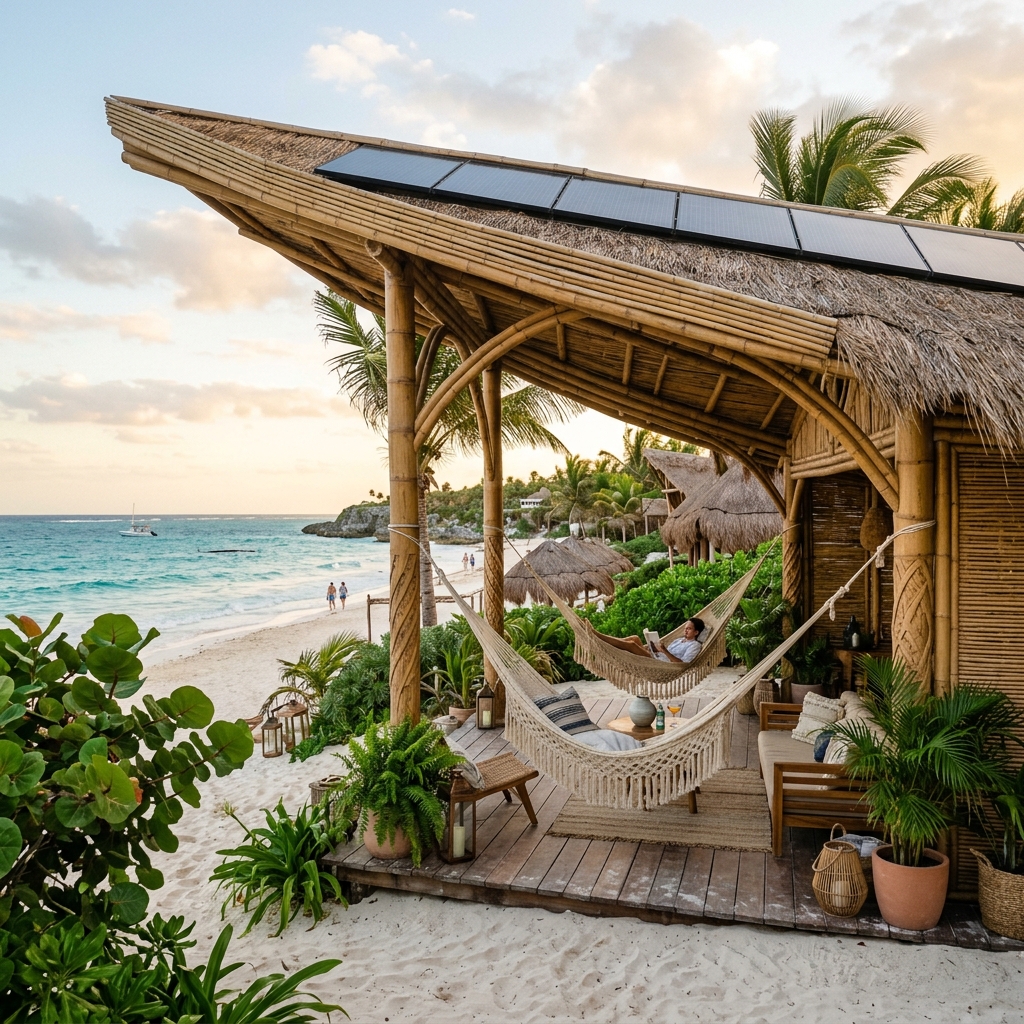
Tulum's hotels almost universally describe themselves as "eco" — eco-hotels, eco-chic, eco-luxury, eco-conscious. The word has been so thoroughly marketed that it's become nearly meaningless as a differentiator. Here's what "eco" actually means at Tulum properties, and how to evaluate the claims.
What "eco" genuinely means at some Tulum hotels
Solar power: Several original hotel zone properties were built without grid electricity connections — solar panels and generators provide limited power. This is a genuine constraint and commitment. Properties in this category typically have limited air conditioning (or none), limited device charging capacity, and lighting that depends on natural light and candles after dark. The most famous example: Hartwood restaurant, which has operated by fire and candlelight since opening. Some hotels in this category include La Zebra, Coqui Coqui, and several smaller palapa-structure properties.
Rainwater collection and greywater recycling: Several properties use closed-loop water systems that collect rainwater and filter greywater for garden irrigation. This is a genuine environmental commitment in a region where water resource pressure is significant.
Local building materials: The characteristic Tulum palapa roof (thatched with locally grown palm leaves), rough-hewn local hardwoods, and limestone stone work are genuinely local materials. When used in original construction, these represent real engagement with local material culture. When imported as aesthetic signifiers, they're décor.
What "eco" often means in practice
At many Tulum hotels, "eco" means: no plastic straws, composting that may or may not actually happen consistently, a small garden of local plants, and marketing language emphasizing connection with nature. These are not meaningless, but they don't represent the same commitment as genuine off-grid operation or certified sustainable practices.
Certified vs. self-described
Mexico's environmental agency (SEMARNAT) and international certifications (Rainforest Alliance, Green Globe) provide verifiable eco-standards. Very few Tulum hotels hold formal certification — most "eco" claims are self-described. Before paying an eco-premium, ask specifically: What percentage of the property's energy comes from solar? How is wastewater managed? What local materials were used in construction? Properties with genuine eco-credentials will answer these questions specifically.
Properties worth the premium for authentic eco-design
Azulik: The most architecturally committed eco-design in Tulum. Tree-house structures built without electricity, cenote access, and a construction philosophy that has been covered in international design media. The premium is real ($800–2,000+ USD per night) and some of it reflects genuine design commitment. Nomade: Strong solar infrastructure, thoughtful material sourcing, and consistent application of the eco-philosophy across operations. $400–900 USD per night. Be Tulum: Good environmental practices and one of the more transparent hotels about what they actually do versus what they claim. $300–700 USD per night.
