
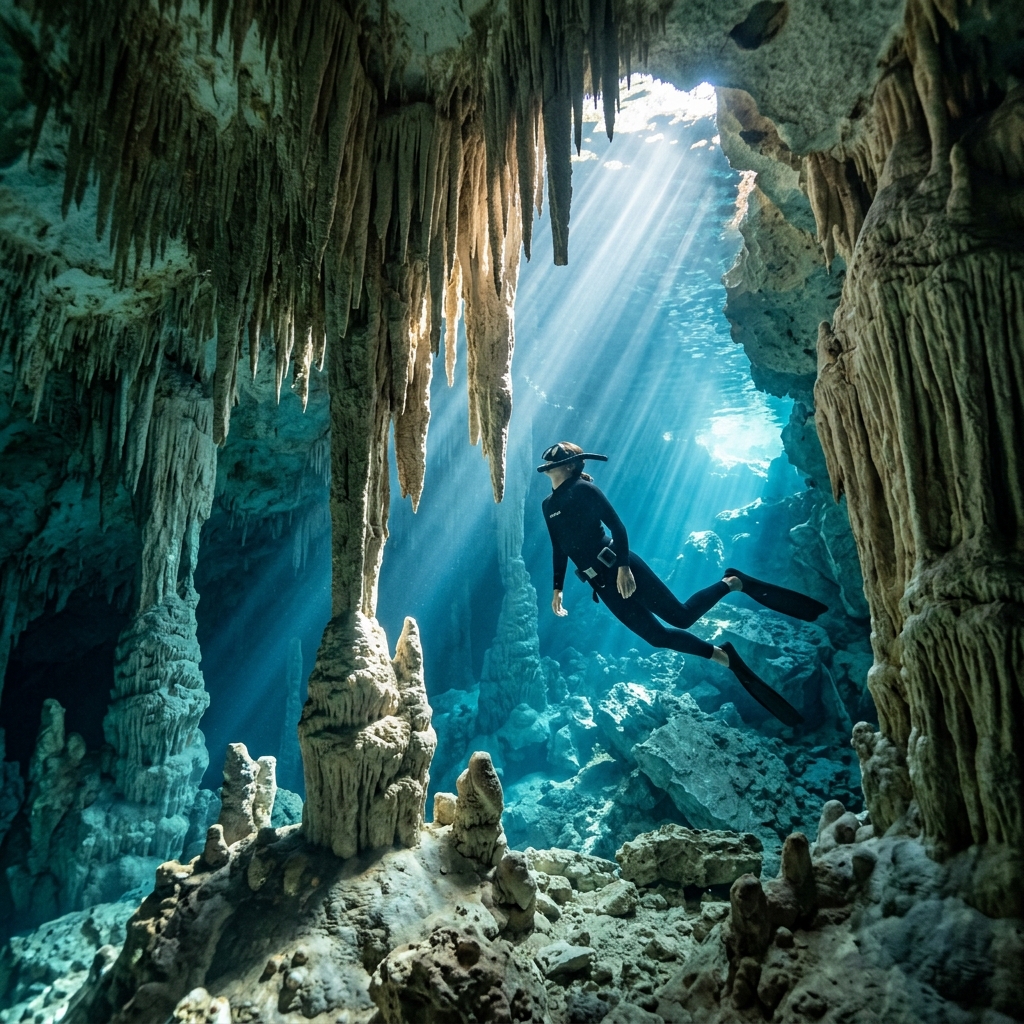
Cenote snorkeling near Tulum is categorically different from ocean reef snorkeling. The freshwater is cooler (24°C year-round versus 28–29°C ocean temperature), the visibility is often extraordinary (30–50 meters in clear cave passages), and the environment — stalactites, cave walls, halocline effects — has no equivalent in any ocean setting. Here's how to experience it well.
What cenote snorkeling involves
In open cenotes (Gran Cenote, Calavera, Zacil-Ha), snorkeling means swimming on the surface of a freshwater pool surrounded by limestone and, in some cases, partially submerged cave walls. Visibility is excellent, depth is typically 3–15 meters, and the experience is similar to swimming in an exceptionally clear mountain lake — beautiful but not dramatically different from surface swimming.
In cave cenotes (Dos Ojos, sections of the Sac Actun system), snorkeling means following a guide through cave passages on the surface, with the cave ceiling 1–5 meters above you and cave floor 2–8 meters below. This is the more distinctive experience — the silence, the darkness beyond headlamp range, the physical scale of the cave formations, and the extraordinary water clarity combine into something with no equivalent anywhere else.
The best cenotes for snorkeling
Dos Ojos: The definitive cave snorkeling experience. Two caverns connected by 400 meters of passage. The bat cave section has stalactites and the water surface is mirror-flat when undisturbed. Entry with guided snorkel: $500–600 MXN. Maximum group size: 8 people per guide. This limit is enforced and is the right choice — larger groups disturb the cave environment and reduce visibility.
Gran Cenote: The best open-plus-cave snorkeling combination. The main open section is for swimming and surface snorkeling; the cave arms have lower ceilings and more stalactite formations accessible by snorkeling slowly in. Entry: $350 MXN. Snorkel equipment rental: $50 MXN.
Cenote Manatí (Casa Cenote): 15 km north of Tulum near Tankah Bay. An unusual open channel cenote connected to the ocean — freshwater at one end, saltwater at the other, with a visible halocline where they meet. Actual manatees have been sighted here (hence the name), though sightings are not guaranteed. Entry: $200–300 MXN.
Equipment
Bring your own mask if you care about fit — rental masks are functional but generic and leaking is common. Fins are helpful in the cave passages where currents can be present. A wetsuit (1–3mm) is useful for Dos Ojos where the cave sections are cooler than the open cenotes. Most cenote operators rent all equipment; bring your own if snorkeling quality matters to you.
Guide requirements
Cave snorkeling (Dos Ojos and similar) requires a guide — both for safety and for navigation. Guides are included in the entry fee at organized sites. Open cenote snorkeling does not require a guide. The guides at Dos Ojos are specifically trained in cenote navigation and are the best in the region — follow their instructions about staying at the surface and not touching cave formations.
