
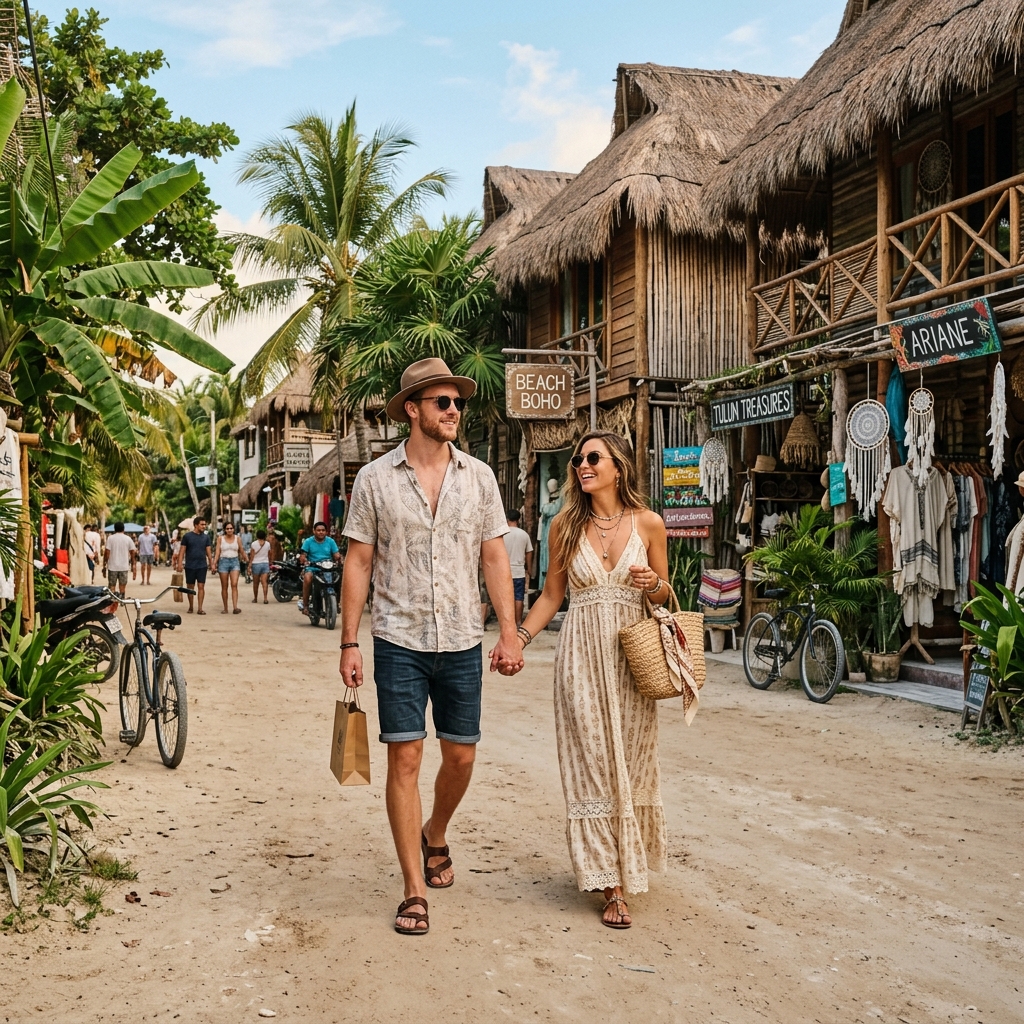
Tulum's "boho" aesthetic — the combination of natural materials, spiritual imagery, global nomad culture, and Caribbean setting — has become one of the most recognized visual identities in international travel. Understanding what it actually is, where it came from, and what exists beneath the surface makes the experience of Tulum more meaningful and more honest.
What the boho aesthetic is and where it came from
The Tulum aesthetic as it exists today was largely created between 2010 and 2018 by a specific community: European and American designers, architects, artists, and entrepreneurs who arrived in a largely undeveloped jungle environment and built structures, businesses, and visual identities using local materials — palapa roofing, rough-hewn wood, local stone, handwoven textiles — combined with global influences from Bali, Ibiza, Marrakech, and mid-century Mexican modernism.
This community created the distinctive Tulum look and the lifestyle economy around it. Many of them have since moved on as the commercialization they created attracted the mass market that replaced the original community. The current hotel zone is a reproduction of their aesthetic at scale — functional and often beautiful, but a copy of what was once original.
Where the genuine creative culture persists
The creative community hasn't left Tulum entirely — it's moved to the edges. The market stalls in Tulum Pueblo run by Mexican artisans making work from local materials. The yoga teachers and somatic practitioners who came for the environment and stayed for the community. The small independent restaurants where the owner is also the chef. The musicians who play the Pueblo bars. These aren't the photogenic settings of the hotel zone, but they're where the creative energy that originally made Tulum interesting continues to operate.
The Instagram reality check
The Tulum that appears on Instagram is a highly curated selection of the hotel zone's most photogenic moments — sunrise yoga on a cliff, cenote swims in empty cave, meals at candlelit jungle restaurants. These moments are real and available. They're also available to approximately 1.5 million annual visitors who are trying to photograph the same things. The gap between the Tulum of social media and the Tulum of peak-season reality is significant.
How to engage authentically
Visit the Pueblo market and buy from local artisans rather than hotel zone boutiques. Eat at El Camello Jr. and Taquería La Nave rather than exclusively at hotel zone restaurants. Attend a yoga class at the Pueblo studio Yoga Shala rather than only at the hotel zone resort programs. Walk or bicycle between destinations rather than using taxis. These choices don't make you a "real traveler" in some superior sense — they just connect you to the actual community of Tulum rather than only the consumption layer built for visitors.
