
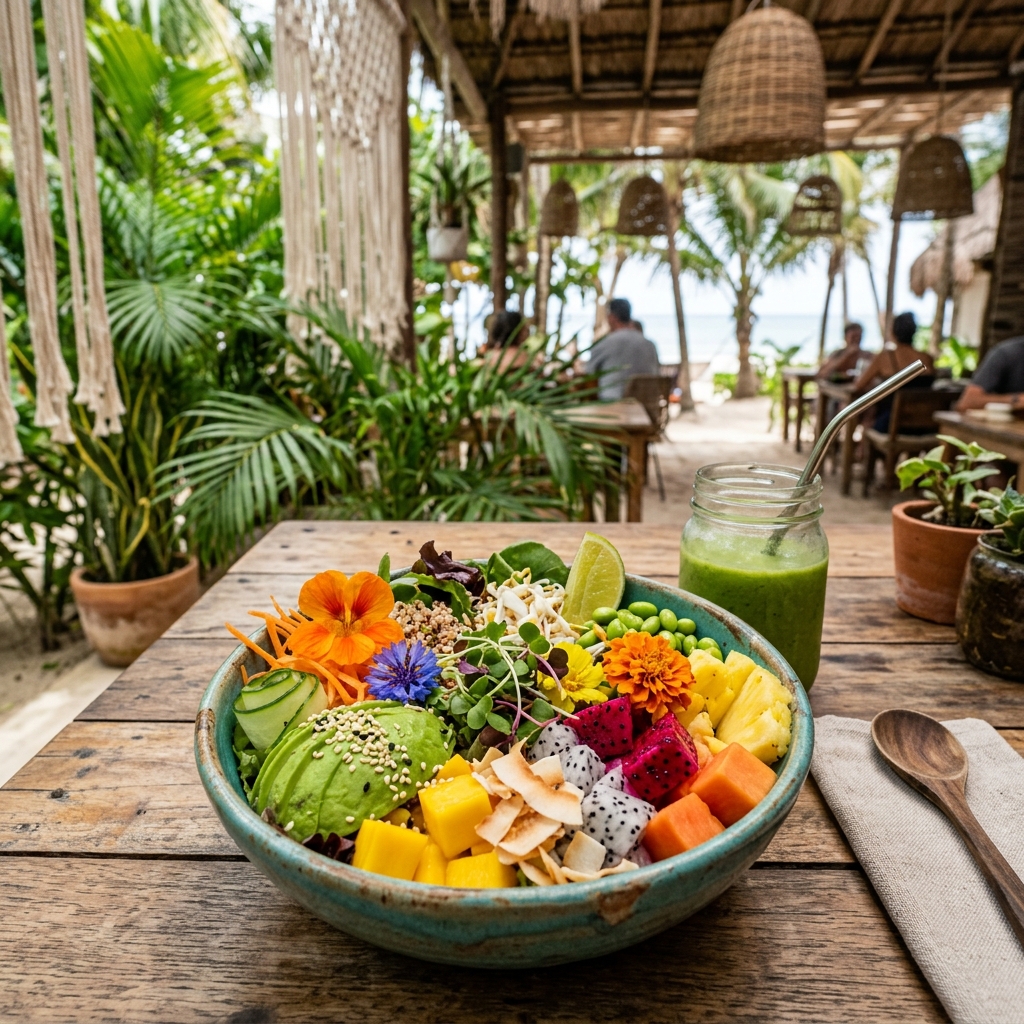
Tulum has one of the highest concentrations of vegan and vegetarian restaurants in Latin America — a direct product of the wellness-oriented international community that has made the city its base. This guide separates the genuinely good from the overpriced wellness-aesthetic establishments.
Why Tulum works for plant-based eating
The combination of a health-conscious international visitor base, local produce that's genuinely exceptional (tropical fruit, diverse vegetables, avocados, chiles), and a restaurant community that takes ingredient quality seriously means that vegan and vegetarian food in Tulum is often better than in cities where it's more common. The hotel zone specifically has built a market for plant-based cuisine that has attracted serious chefs rather than just health-food trend-followers.
Best vegan and vegetarian restaurants
Pura Vida Tulum (hotel zone): The most established plant-based restaurant in the hotel zone. Açaí bowls, raw preparations, cooked vegan plates, and fresh juices. The quality is genuinely high — the produce is locally sourced and the preparations are thoughtful rather than simply "everything without meat." $200–400 MXN per person. Open breakfast and lunch only.
Raw Love (hotel zone): Specializes in raw food preparations — dehydrated, sprouted, and fermented foods alongside smoothies and fresh juice. More specialized than Pura Vida. The raw cacao desserts are the best in Tulum. $150–350 MXN per person. Closed in the hottest months (June–August).
Burrito Amor (Tulum Pueblo): A local institution. The vegetarian burritos here use handmade tortillas, fresh local vegetables, and black beans prepared with actual attention. $80–150 MXN per burrito. The Pueblo location means local prices for what is genuinely good food. Not vegan (cheese used) but fully vegetarian-friendly.
Navigating Yucatecan cuisine as a vegetarian
Traditional Yucatecan cuisine is meat-heavy — cochinita pibil, poc chuc, and similar dishes are all pork or chicken based. However, several traditional preparations are naturally vegetarian: papadzules (egg-filled tortillas in pumpkin seed sauce), sopa de lima (can be made without chicken though less common), and the various preparations based on black beans, chaya (a native leafy green), and local squash varieties. In traditional Pueblo restaurants, asking about "platillos sin carne" (dishes without meat) will usually produce honest answers about what's possible.
What to watch for
Several hotel zone "vegan" restaurants use the label loosely — dishes described as vegan sometimes contain honey, ghee, or other animal products. If strict veganism is important, ask specifically about each ingredient. The Pueblo market is the most reliable source of genuinely plant-based food — fresh fruit, vegetables, and prepared foods where you can see every ingredient.
