
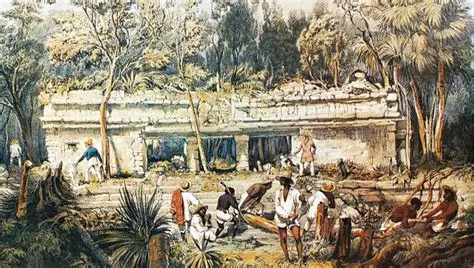
Tulum's Story Didn't End When Europeans Reached the Caribbean
Walking through the Tulum Ruins, it's easy to imagine that the Maya city had already been abandoned long before the Spanish arrived.
It hadn't.
Unlike other major Maya centers that had experienced significant population decline centuries earlier, Tulum was still inhabited and active when the Spanish reached the Yucatán Peninsula in the 16th century.
What happened afterward helps explain why today we walk among archaeological structures rather than through a living coastal city.
Tulum Was Already There When the Spanish Arrived
Tulum experienced much of its development during the Late Postclassic period, roughly between the 13th and 15th centuries.
Its Caribbean location wasn't just beautiful.
It was strategic.
The city participated in trade networks connecting different communities along the coast and other parts of Mesoamerica. Cotton, food, crafted objects, and other goods traveled through both land and maritime routes.
So when Europeans began exploring these shores, they weren't simply encountering abandoned temples.
They were encountering active Maya communities.
The Spanish First Saw This World From the Caribbean
Some of the earliest European encounters with the region occurred during Spanish expeditions in the early 16th century.
Historical accounts describe substantial settlements along the Yucatán coast, with buildings that impressed the explorers who saw them.
Tulum was part of that coastal world.
Imagine the scene for a moment.
European ships offshore.
A walled city rising above a cliff.
Temples visible from the Caribbean.
And two societies whose histories had previously developed independently beginning to encounter one another.
Then Came Disease
The transformation wasn't driven by warfare alone.
Diseases introduced from Europe had devastating consequences for Indigenous populations throughout the Americas.
Epidemics involving illnesses to which local populations had no previous immunity contributed to severe demographic decline in many regions.
Maya communities across the Yucatán Peninsula were affected as well.
And these epidemics unfolded alongside Spanish conquest and the political, economic, and religious restructuring of the region.
Conquest Changed the Networks That Kept Tulum Alive
Tulum didn't exist in isolation.
It depended on relationships with other communities, commercial routes, and political structures that were rapidly changing during the 16th century.
Spanish expansion disrupted those networks.
New settlements and centers of power developed under colonial rule, while Christian evangelization and new economic systems transformed life for Maya communities.
Gradually, Tulum's role within the coastal Maya world became less important.
So When Was Tulum Abandoned?
There wasn't one cinematic moment when everyone simply packed up and left.
Abandonment was a process.
During the decades following Spanish contact, the population declined and the settlement gradually lost its former political and commercial role.
By the end of the 16th century, Tulum had largely ceased functioning as the city it had been before the conquest.
Vegetation slowly began reclaiming spaces that generations of people had once used in everyday life.
But that doesn't mean Tulum disappeared from Maya memory.
The Maya Never Disappeared
This distinction matters.
Talking about the “end of Tulum” does not mean talking about the end of the Maya.
Maya communities continued living throughout the Yucatán Peninsula during the colonial period and remain an essential part of the region today.
Maya languages, knowledge, traditions, foodways, and communities are very much alive.
The archaeological city belongs to the past.
Maya culture does not.
Tulum Became Important Again Centuries Later
Although the ancient city stopped functioning as an urban settlement, the site continued to hold significance for later Maya communities.
During the 19th century, in the context of the Caste War of Yucatán, Tulum once again gained religious importance among Maya groups in the region.
That makes its story considerably longer than what you might hear during a quick visit.
Tulum didn't simply go from “Maya city” to “tourist attraction.”
It has carried different meanings across different centuries.
Next Time You're Standing by El Castillo Look Toward the Sea
When you visit the Tulum Archaeological Zone, stop for a moment and look toward the Caribbean.
Mentally remove the hotels, roads, beach clubs, and everything else associated with modern Tulum.
That sea was a transportation route.
Those walls protected a community.
And those structures belonged to a city that was still alive when the European world began appearing on the horizon.
Understanding what happened after the Spanish arrived makes the ruins feel different.
Because Tulum doesn't belong to the story of some mysterious civilization that simply vanished.
It belongs to a much more complicated history of trade, conquest, disease, transformation, and cultural survival a history that continues around it today.
Want to discover the Tulum that existed long before boutique hotels and beach clubs? Follow our blog for more stories, archaeological sites, and cultural routes around the Yucatán Peninsula, and follow us on social media to keep exploring everything that exists beyond the beach.
